
The previous article explored how to understand users, their motivations and their place in the engagement ladder.
The next step is to use what you have built so far to help more people move from feeling like guests to feeling that they belong. It is also how you establish a community in the original sense of the word.
Make super users feel seen and appreciated
Start with the most important users in your community: your super users and potential super users.

Make your super users feel seen and appreciated. Provide them with a stage.
Super users are one of the most important resources in a community. They provide solutions, give continuous feedback, often recognize pain points before the team does, offer authentic purchasing advice and contribute in many other ways. They want to trust you and may be willing to advocate for you when you are criticized.
Offer them as much as possible to show that you trust them, appreciate their time and effort, value their loyalty and respect their opinions.
In a community of one of my customers, super users are being treated as an extension of the community team through a Super User Program. The program created a shared team, shaped the community together and provided a safe space for its inner circle.
Select for contribution and community values
When the program began, super users were appointed based on their peer-to-peer support. As the community expanded into product reviews and beta testing, the selection strategy changed: requirements for becoming a Super User were refined and new touchpoints and benefits were added.
Activity and engagement provide a preselection, but the final choice is mostly based on soft factors: tone of voice, how candidates interact with other users and the team, and whether their character fits the team’s values.
Build meaningful ways to contribute
A practical super user strategy can include several touchpoints:
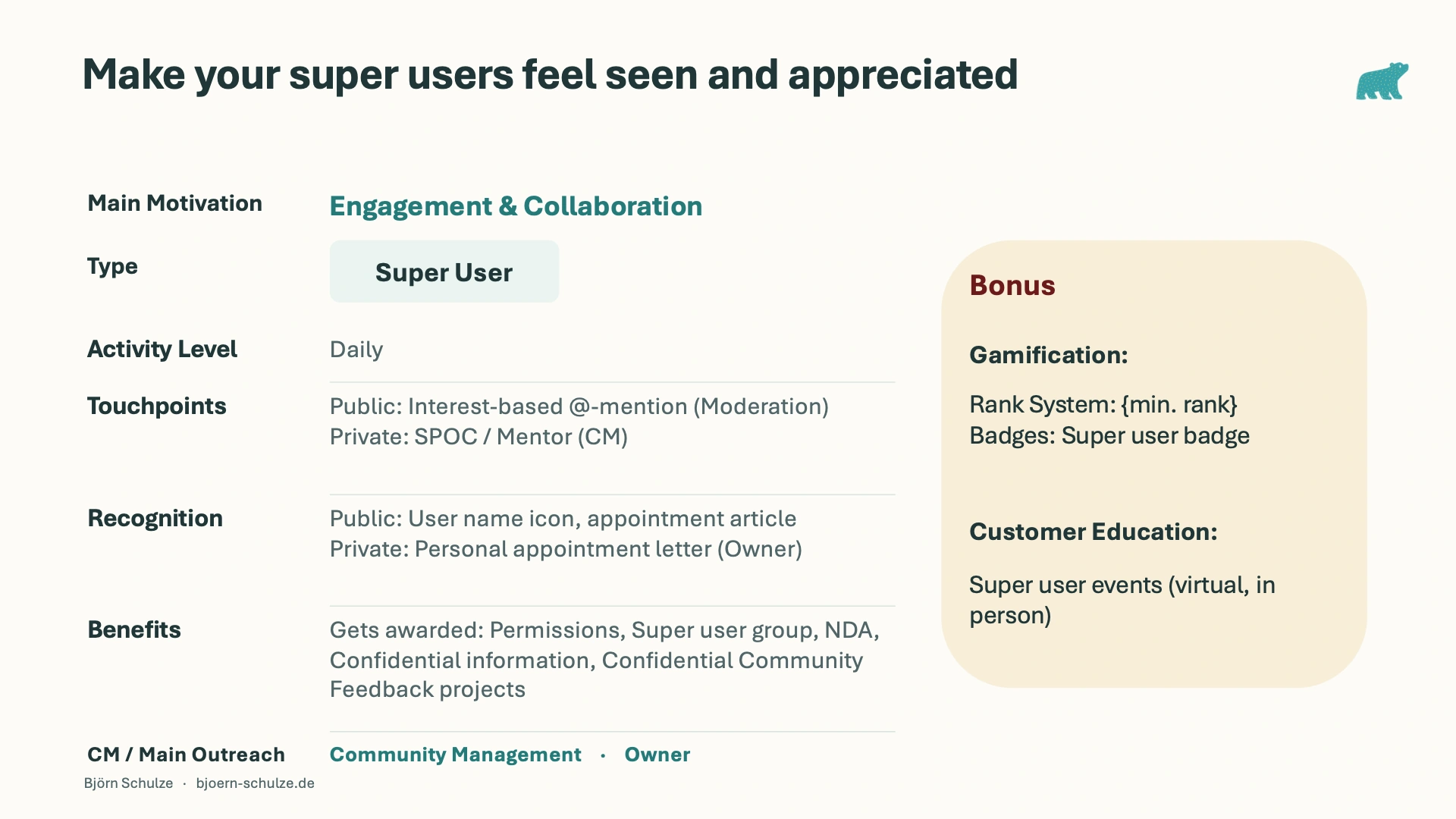
- learn people’s interests and mention them when their expertise can help
- give every Super User a mentor or buddy in the community team
- send a personal appointment letter from Community leadership when inviting someone to the Super User program
- ask Super Users to sign an NDA so more information can be shared
- involve them in confidential feedback projects
- grant special permissions to moderate content
- invite them to workshops
- and add other relevant opportunities.
In short, trust them with information and permissions, give them direct access to your team and company, and recognize and appreciate their contributions publicly.
Next step: Strong relationships depend on the way a community team behaves every day. Leading by example: Be open. Be transparent. Be accountable. Be bold.