The previous article linked community feedback to the product development cycle and showed how you can bring your Product team and your community together.
By now, the scope of your community has expanded: you started with support and have added customer experience value. Users are beginning to trust you with their time. They leave feedback, and you have processes to make use of it. The next step is to build a strong community where people feel that they belong.
That starts with getting to know your users and enabling both users and the team to build respectful, trusting and constructive relationships. Shared values, shared norms, a sense of belonging and continuous encouragement to participate all help shape a strong community culture.
You can use automation for a lot of things, but you cannot automate personal relationships.
This process takes time and a great deal of manual effort. The concierge workflow included peer-to-peer empowerment. To bring the right users together, understand who contributes value and invite people to improve the community and its products, you need to know their motivations and needs.
Build an engagement ladder
An engagement ladder can become the foundation for many community activities: gamification with ranks and badges, a product feedback program, community education and other added value.
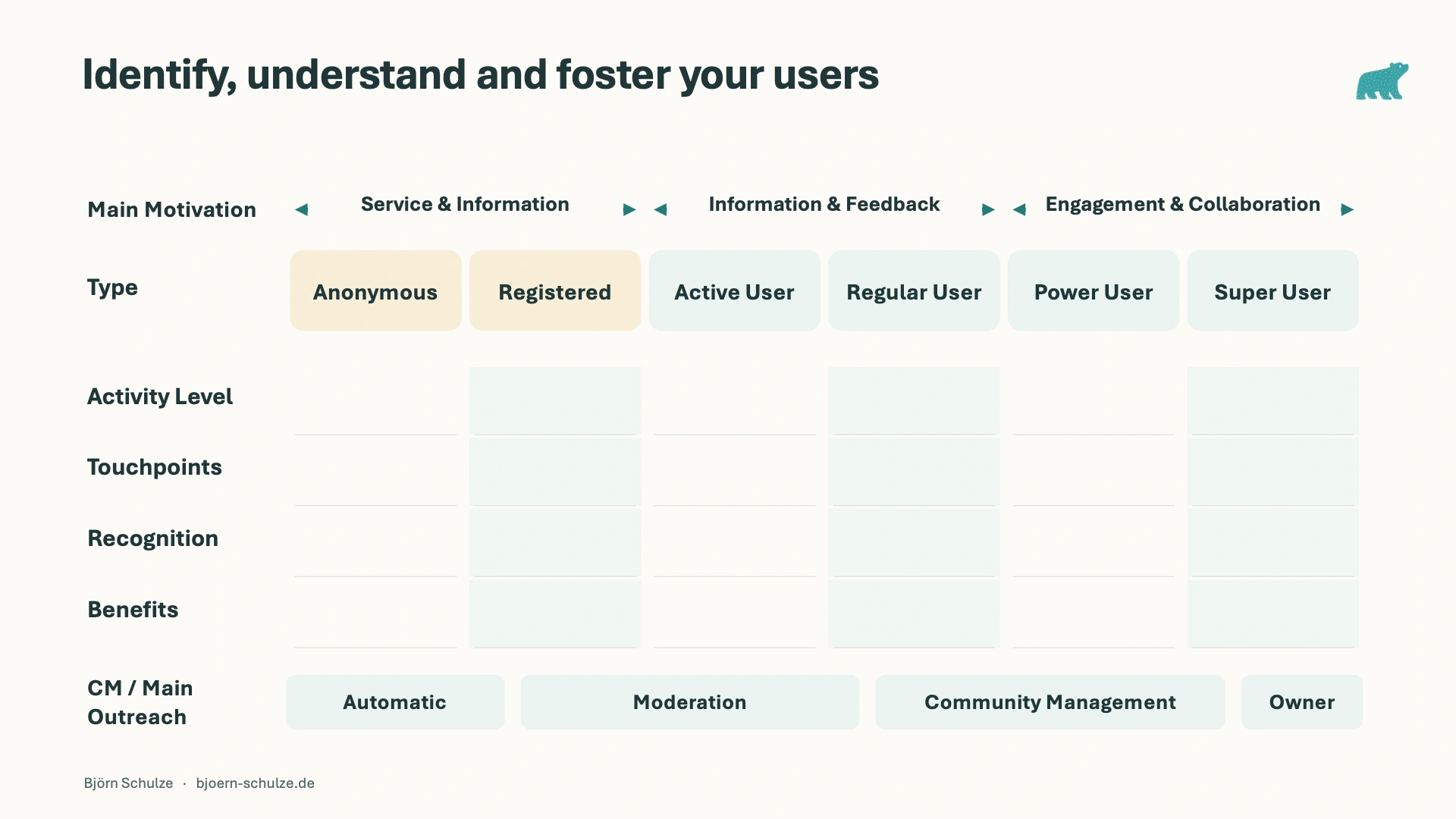
The graphic shows a simplified engagement ladder developed for a community. It works like a funnel. It begins with a first contact, usually when a customer needs support. After a good first experience, that person may return the next time support is needed.
When the community is inviting and useful, users begin to take part in topics beyond their own service needs. They become active in other discussions, share feedback and their motivations change over time. Some eventually visit weekly or daily. Support is no longer their main reason to participate: they know the products, want to share knowledge, feel that they belong and value recognition for constructive contributions.
People do not move up the ladder on their own. You have to understand their motivations and needs, build real relationships with them and give back.
Recognize regular users
A regular user may visit once or twice a month – or however often you define “regular” in your own community. Their motivation has started to shift toward deeper engagement; participation is no longer only transactional, such as asking a question, saying thank you or saying goodbye. They may want to share an opinion and may already have provided a few solutions for others.
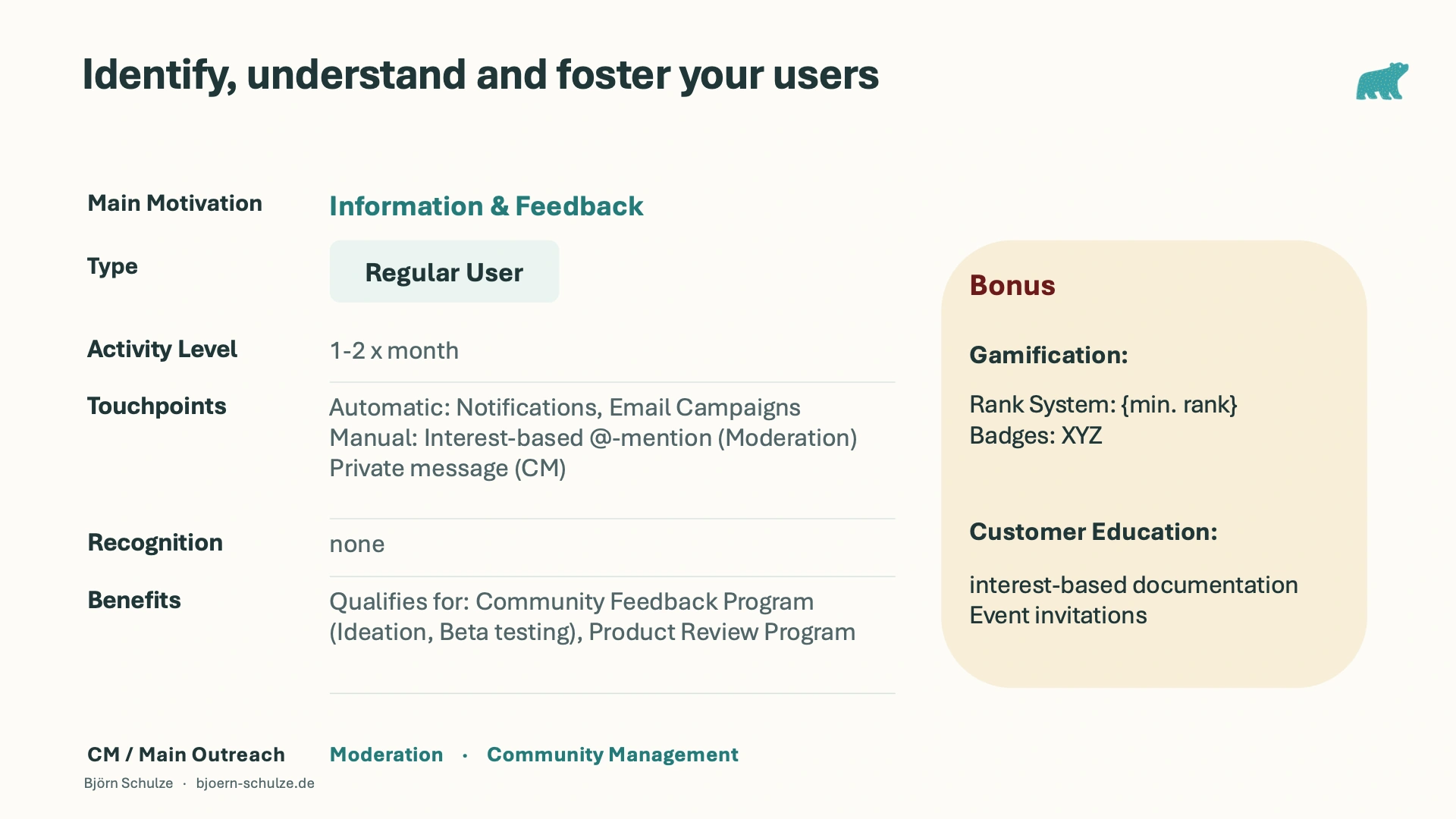
You can reach out to regular users through notifications on topics where they have participated, targeted email campaigns and relevant mentions when their knowledge could help. A moderator can also contact them through a personal private message to show appreciation and to signal that their activity is being seen and valued.
In a community I lead, regular users do not receive public recognition, which is reserved for power users and super users. Depending on their activity, they may receive a badge or two. They can also be invited to feedback programs because their motivation has shifted and they are more likely to be interested. But your mileage may vary, and you may find other recognition and benefits better suited to your community.
Measure movement through the activation funnel
An engagement ladder also needs measurement. The activation funnel helps you assess how effectively users move from one step to the next.
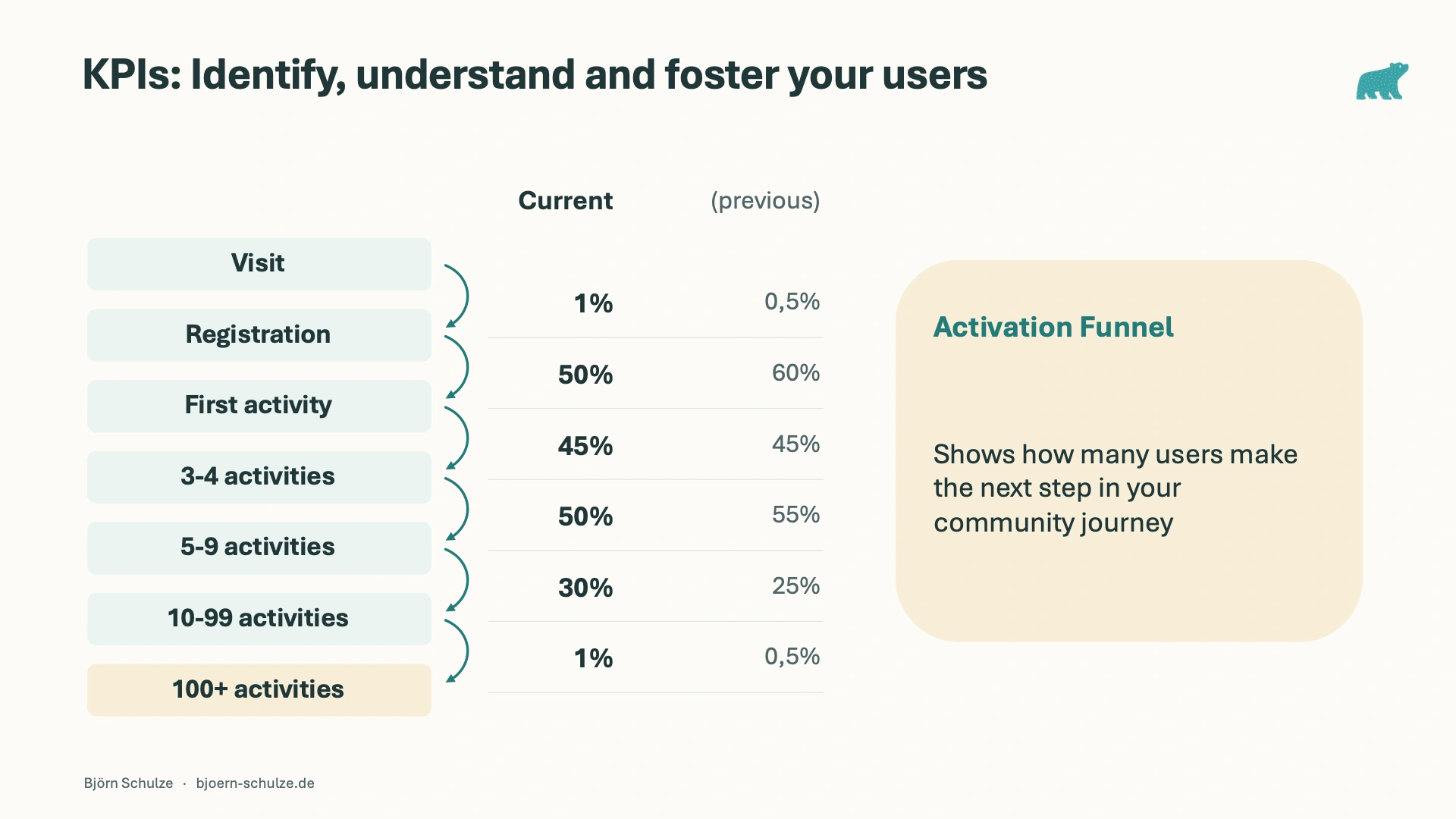
The left side shows the thresholds defined for activity levels; the right side gives an example of how many people make the next step. In this example, one percent of visitors have registered, and 50 percent of those registered have been active at least once. The same logic continues through the funnel.
Use your own numbers to see where too many users drop out, then improve the relevant touchpoints, recognition, benefits or gamification.
Next step: You now know your users and their motivations, and you are starting to build relationships with them.