

By now, peer-to-peer support has started to establish. Because of that, you have freed up some resources. Now you are ready to extend the scope.
So let’s dive into how a community can become a customer experience driver for your organisation.
The first thing you should understand is:

People will give you feedback in your community –
whether you ask for it or not.
Your customers will give you feedback about the experience they make with your products. It could be hidden in a question. It could look like a throwaway comment within an unrelated discussion. It could be a long rant about their frustration with some very specific function. It could be a private message to a moderator.
It could be anything.
So, as Vanilla Ice puts it so eloquently: “Stop, collaborate and listen“. Listen to customer feedback very carefully and collaborate with your product team to fix your customers’ pain points.
If you can evolve your community to become a customer experience hub, you become a very powerful asset. Make use of the resources you saved when you scaled your moderation and start becoming an advocate for your community users.
So, the very first step is to find the pain points. There are several ways and tools to do that. I’ll just name a few.
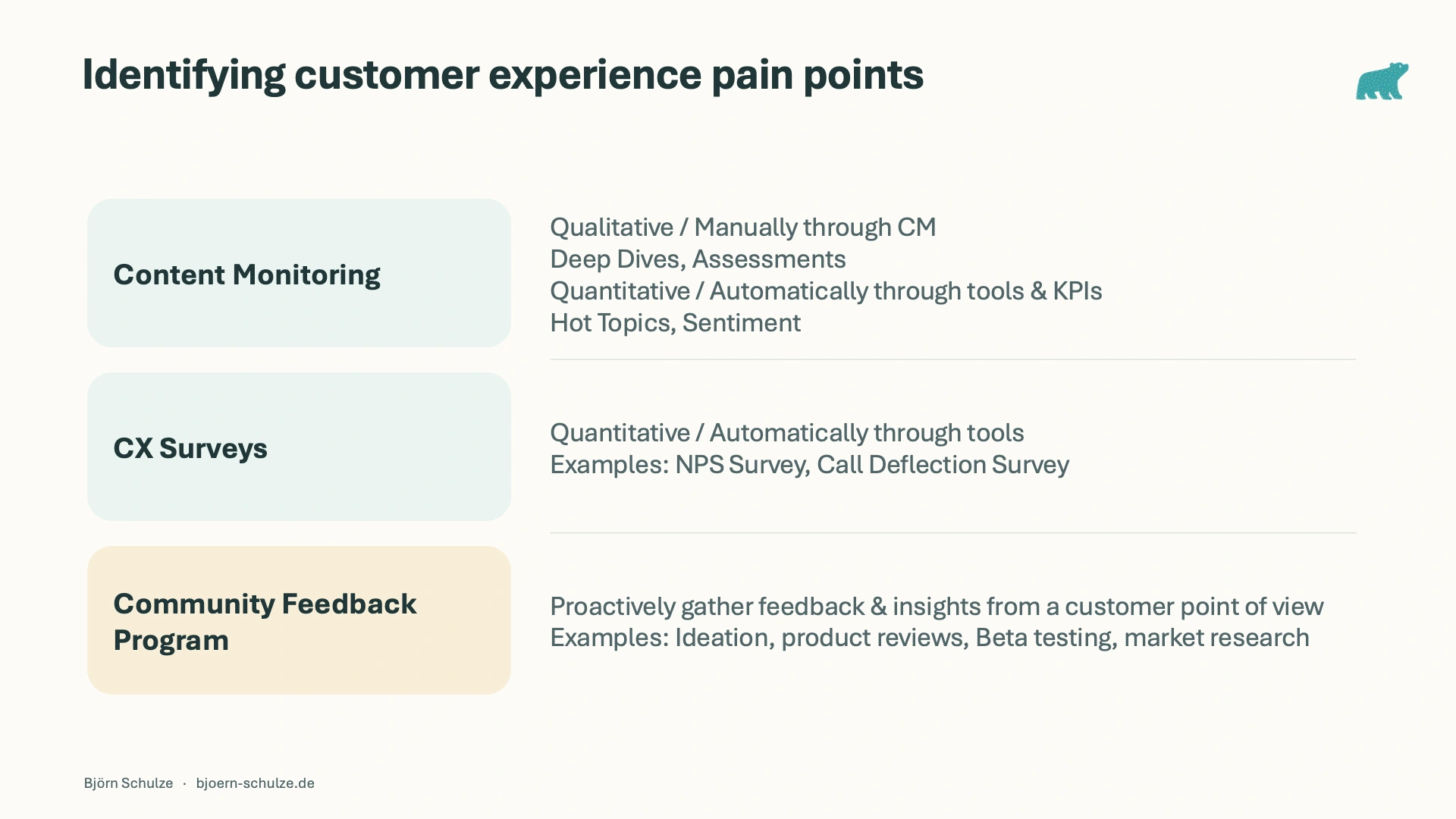
Find customer experience pain points
Content Monitoring
The goal of content monitoring is to identify pain points, assess their urgency, and curate content to provide your product team with actionable insights. To achieve this, focus on building efficient processes and leveraging tools that help you stay in control of your content.
Customer experience surveys
CX surveys allow you to gather valuable insights by asking users about their experiences. A popular example is the classic Net Promoter Score (NPS). You can take your NPS survey further by asking users why they voted the way they did. With this simple addition, you’ll receive lots of valuable feedback.
Community Feedback Program
Also, you can launch a Community Feedback Program that directly connects your product team with your community.
Turn feedback into action
Now that you are gathering feedback, it’s time to actually do something with it. Your role as a community team now is to become the customers’ advocate. Show your customers that you care, that you understand and that their opinions matter.
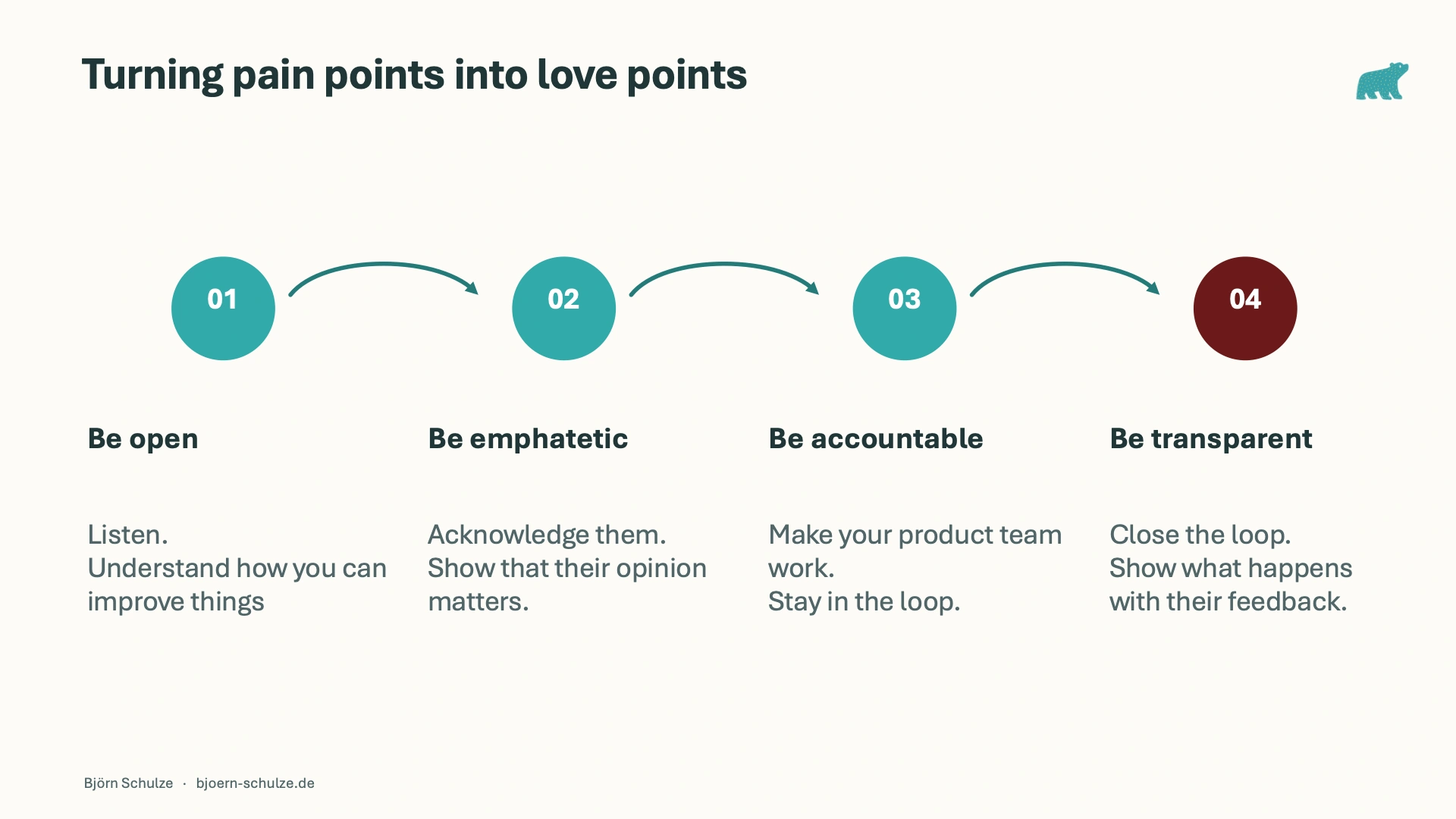
But you have to actually deliver.
Connect with the product team to present the pain points, highlight the number of users impacted, propose potential solutions, gather their feedback, and understand what actions will be taken and when. Stay engaged throughout the process.
Most importantly, be transparent with your community:
Clearly communicate what will happen with their feedback:
What will be prioritized – and when.
What won’t be addressed – and why.
Close the feedback loop with clear communication about planned actions, priorities, expected timing, and any feedback that cannot be accommodated and why. Customers understand that not every pain point or feature request can be implemented, but you have to be honest and transparent with them about it.
Next step: You have now set the basis to create a Win-Win-Win situation by establishing a Feedback Program that fits your Product Development Cycle.